Made In Great Britain

Direct from our factory

Free Next Day Delivery

On orders over £750

Product Test Results

All test results published

Expert Technical Advice

Call or chat with our team

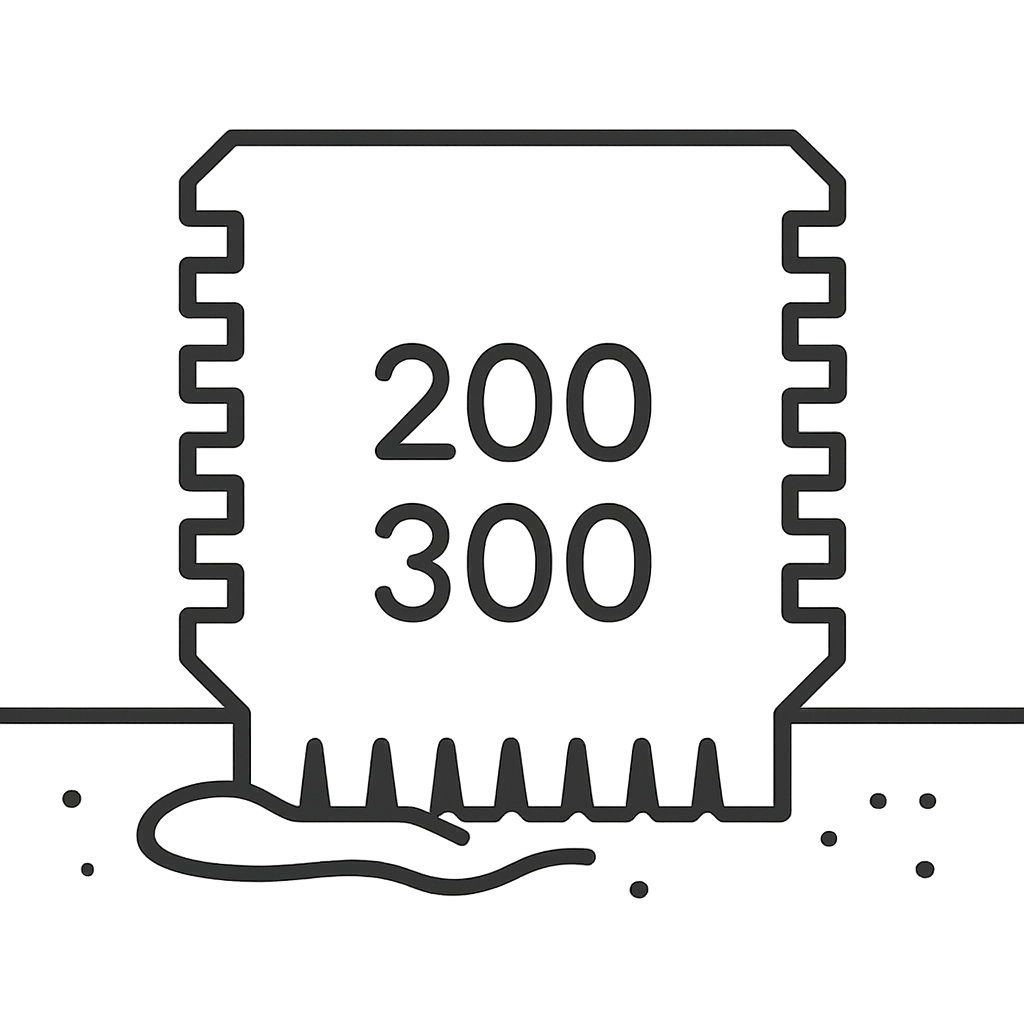
Laid at 220 microns. Cures at 220 microns.

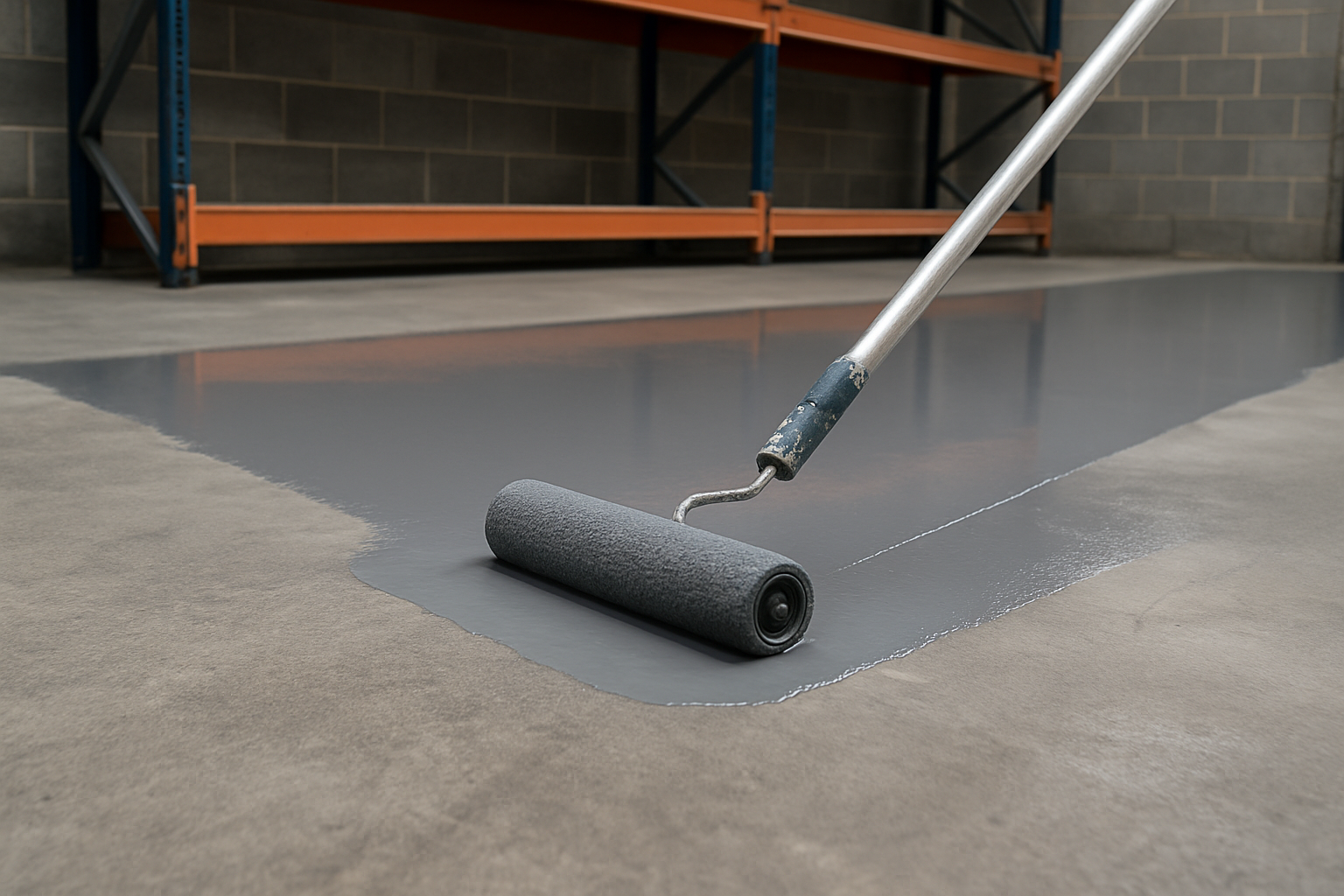
Warehouse and workshop floors take punishment that thin coatings cannot absorb: pallet traffic, dragged steel, dropped tools and constant foot movement over bare concrete. Solvent-borne floor paints shrink back as their thinners evaporate, so the film left behind is a fraction of what went down and wears through at the busy lines first. EnduraCoat Original is 100% solids, so nothing leaves the film during cure. A 220 micron wet application cures at 220 microns dry, giving a high build epoxy with the wear and abrasion resistance the setting demands. For the applicator, that means no thinning, no spray kit and no guesswork — mix the unit, roller it out, and what you lay is what you keep.

Before

After

Click an icon to explore features Tap an icon to explore features

Zero Shrinkage Film

The resin is 100% solids, so nothing is lost to evaporation as the coating cures. A 220 micron wet film stays a 220 micron dry film. Two coats build the full thickness without solvent voids or sinkage.

Two-Part Chemical Cure

Mix the base and hardener at 3.55:1 and the film cures by chemical reaction, not by drying. Pot life is 30 minutes at 20°C, so mix only what you can lay in that window. Recoat after 10 hours at 20°C, with full cure at 16 hours. Keep unmixed containers out of direct sunlight and hot areas, as heat shortens pot life.

Performance Profile

Two-component, 100% solids epoxy. Resin and hardener react to form the film, so there is no solvent loss and no shrink-back. The figures below are the working numbers for planning a floor: what a unit covers, how long you have once it is mixed, and how thick the coating sits on the slab.

Download Data Sheet
Coverage 18.2m²per 5kg unit
Solids Content 100%solvent free
Pot Life 30 minutesat 20°C
Film Thickness 220 micronswet and dry

Essential Information

Product Details

Description

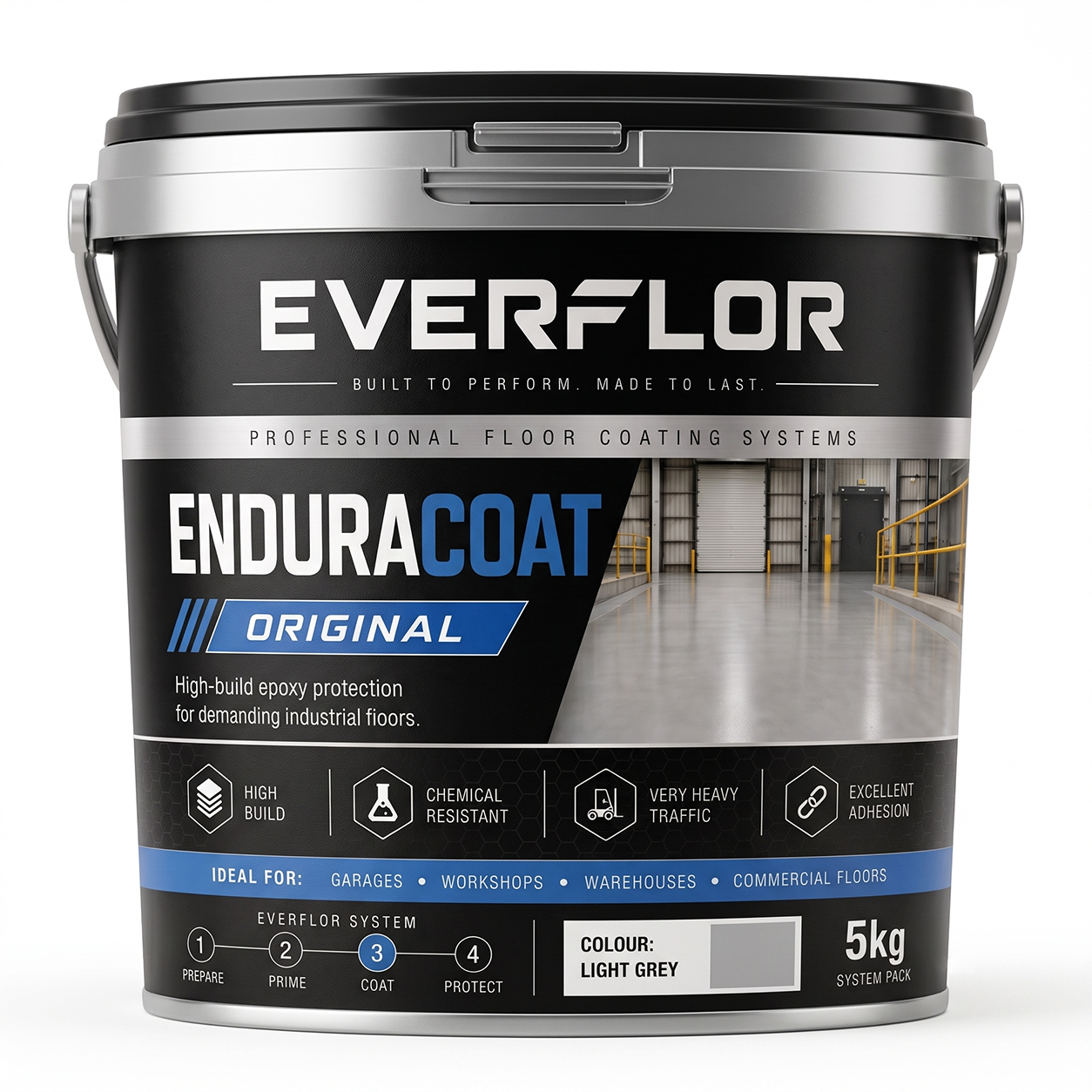
EnduraCoat Original is a two-component, 100% solids epoxy floor paint for interior use. The resin and hardener are supplied as a matched unit and mixed on site. Once mixed, the two parts react and cure into a continuous glossy film bonded to the floor.

Because the formulation is solvent free, nothing evaporates out of the coating as it cures. The wet film thickness and the dry film thickness are the same, so a 220 micron application stays 220 microns. That is what gives the coating its body compared with thinned, solvent-borne floor paints, and it means the product is applied unthinned, straight from the tub.

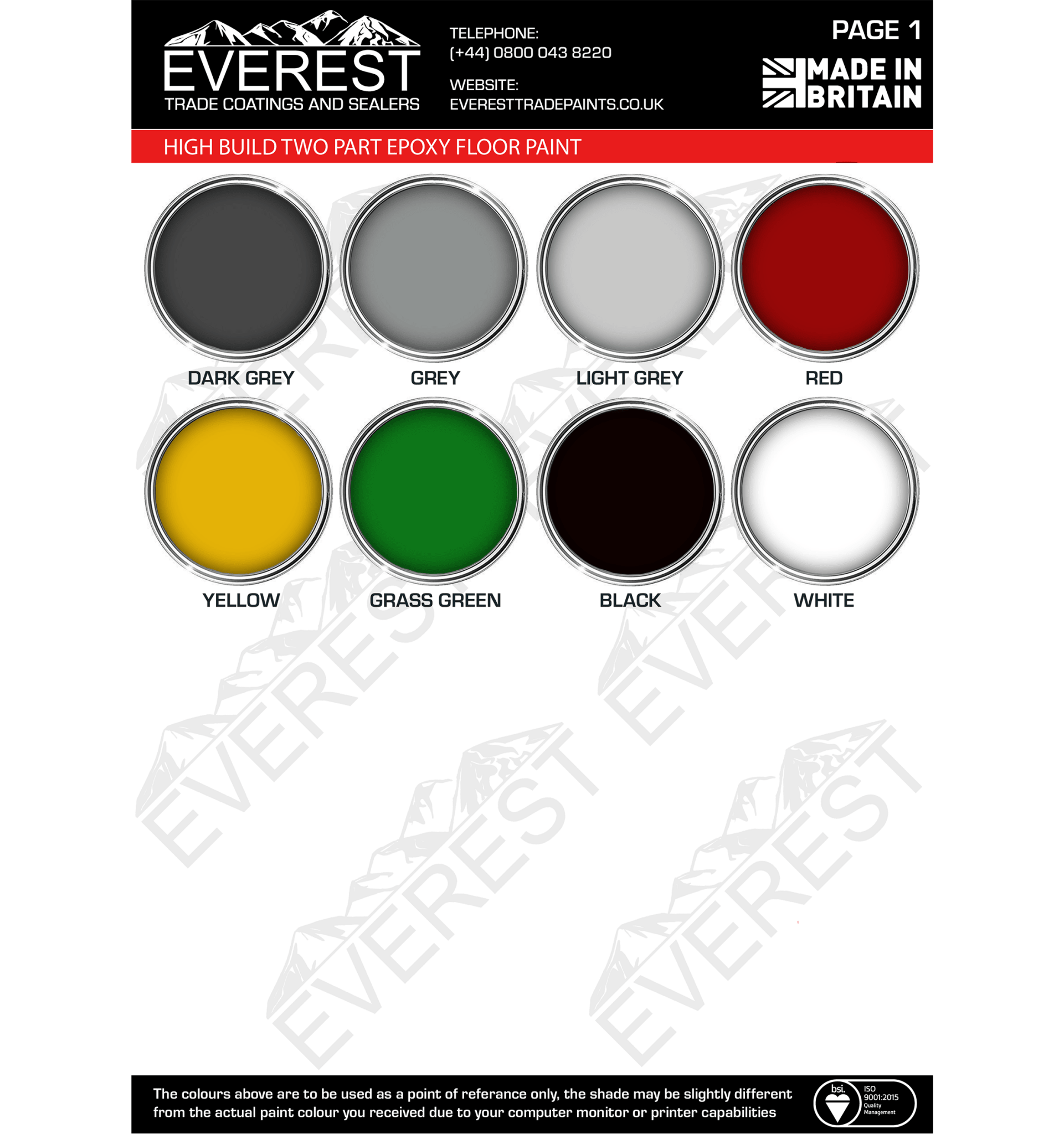
Apply one coat over prepared concrete. Bare concrete must be primed first — an unprimed porous slab releases air into the wet epoxy and leaves pinholes in the cured surface. Over sound, well bonded existing paint or suitable metal, prepare and key the surface, then coat directly. Eleven colours are available, including the RAL safety shades used for walkways, plant areas and hazard marking.

Recommended areas of use

  • Interior concrete floors
  • Warehouse and storage floors
  • Workshops and garages
  • Plant rooms and machine areas
  • Sound, well bonded existing floor paint
  • Some interior metal surfaces

Features

  • 100% solids, so the film does not shrink back as it cures
  • Solvent free, with no thinners added and none released during cure
  • 220 micron wet film gives 220 microns dry in a single pass
  • Glossy, smooth finish that sweeps and mops clean
  • Cures by chemical reaction, so it is not reliant on ventilation to dry
  • Brush or roller applied, with no spray equipment needed
  • Eleven colours, including RAL safety shades for zoning and marking
  • 24 month shelf life in unopened containers

Good to know

This is an interior coating. Do not use it outdoors. If the film is exposed to UV before it has fully cured, discolouration is more likely.

Pot life is 30 minutes at 20°C, and heat shortens it. Keep unopened containers out of direct sunlight and away from hot areas before use, or the mixed unit will go off faster than you can spread it.

Do not apply below 12°C. Mixed epoxy cannot be cleaned out of brushes and rollers in any practical way — plan to discard applicators after use.

Application

SURFACE PREPARATION

Clean the floor thoroughly. Remove surface laitance, dust, dirt and grease — epoxy bonds to the substrate, not to what is sitting on it. Key smooth, dense or power-floated concrete to give the coating a mechanical grip. Rinse off any cleaning residue and let the surface dry completely.

Over existing paint, check that the film is sound and well bonded. Remove anything flaking or loose. Abrade the remaining paint to a matt key.

PRIMING

Prime bare concrete before you coat it. Porous concrete pushes air up into the wet epoxy as it cures, which shows as pinholes in the finished gloss. A primed slab seals that off and gives consistent adhesion. Existing well bonded paint and prepared metal do not require a primer.

MIXING

Mix at 3.55 : 1. Stir the resin first, then add the hardener and mix the full unit to a uniform colour, scraping the sides and base of the container. Do not add thinners — the product is solvent free and is applied as supplied.

Once mixed, the reaction has started. You have 30 minutes at 20°C, and less if the material is warm. Store containers between 5°C and 30°C and keep them out of direct sunlight and hot areas before use, since heat cuts pot life. Decant into a tray and get the material onto the floor without delay.

APPLICATION AND CURING

Apply by brush or roller at 220 microns wet film thickness. Work it well into the surface and keep a wet edge across each bay. One coat is recommended.

Do not apply below 12°C. If you apply a further coat, recoat after 10 hours at 20°C. Allow 16 hours for cure, and keep the coating out of UV until it has fully cured — early UV exposure makes discolouration more likely. This is an interior coating only.

Cured epoxy cannot be washed out of brushes and rollers in any practical way. Discard applicators after use.

Available Colours
  •  
    Black (RAL 9005)
  •  
    Dark Grey (RAL 7016)
  •  
    Mid Grey (RAL 7001)
  •  
    Light Grey (RAL 7035)
  •  
    Signal White (RAL 9003)
  •  
    Safety Yellow (RAL 1023)
  •  
    Safety Green (RAL 6032)
  •  
    Safety Blue (RAL 5015)
  •  
    Safety Red (RAL 3020)
  •  
    Industrial Blue (RAL 5013)
  •  
    Industrial Red (RAL 3009)
Coverage Calculator
Technical Data
Finish Glossy, smooth
Coverage 18.2m² per 5kg
Recommended coats 1
Recoat after 10 hours at 20°C
Application Brush or Roller.
Cleaner / Thinner No thinning.
Suitable substrates Concrete, well bonded paint, some metals
Shelf life 24 months
Mixing ratio 3.55 : 1
Solids content 100%
Cleaning tools It is not practical to clean applicators and they should be discarded after use
Wet film thickness 220 microns
Dry film thickness 220 microns
Number of components 2
Minimum application temperature 12℃
Principal limitations If the coating is exposed to UV prior to full cure discolouration is more likely. Full containers should not be stored in direct sunlight or overly hot areas just prior to application as increased temperature will reduce potlife.
Cure Time 16 hours
Composition 2 part, 100% solids epoxy resin
Primer required On bare concrete. View ‘Application’ Section
Test Results

Most paint brands tell you what their product should do. We tell you what it does.

Unlike competitors who hide behind vague marketing terms like 'heavy duty,' we validate our claims with standardized testing. Compare our abrasion rates and adhesion scores—you will see the difference between a standard paint and a professional architectural finish.

Slip Resistance (Pendulum)

Tested in accordance with BS 7976-2

Result: PTV 45
Rating: Low slip potential

Abrasion Resistance

Tested in accordance with ISO 5470-1

Result: 40 mg Loss
Rating: Excellent

Adhesion Strength (Pull-Off)

Tested in accordance with EN 1542

Result: 2.5 N/mm²
Rating: Very high adhesion

Gloss Value

Tested in accordance with Optical Glossmeter

Result: 99
Rating: High Gloss

Not sure what these standards mean? We have compiled a comprehensive guide to help you decode the industry jargon. Click here to explore our testing methodology and learn exactly how to interpret these performance metrics for your project.

The Knowledge Hub

Everything You Need to Know

Browse our collection of in-depth articles and how-to guides designed to help you get the most out of this product. whether you need help with surface preparation or application advice, we have you covered.

View Technical Hub

This section doesn’t currently include any content. Add content to this section using the sidebar.

FAQs

Please read our FAQs page to find out more.

Do I need a primer?
Yes on bare concrete. Concrete is porous, and as the epoxy cures the slab releases air into the wet film, which shows as pinholes in the cured gloss. Priming seals the surface and gives consistent adhesion. Over sound, well bonded existing paint you do not need a primer — clean and key the surface instead.
How many coats should I apply, and how long between them?
One coat is recommended, applied at 220 microns wet film thickness. If you do apply a further coat, recoat after 10 hours at 20°C. A 5kg unit covers 18.2m² at the specified thickness, so work out your area before ordering.
How long do I have once the two parts are mixed?
Pot life is 30 minutes at 20°C. The reaction starts the moment resin and hardener meet, and heat accelerates it — a warm container will give you noticeably less working time. Keep unopened packs out of direct sunlight and away from hot areas before use, mix the full unit, and get it onto the floor straight away.
Can I use it outside?
No. EnduraCoat Original is an interior coating. Exposure to UV before the film has fully cured makes discolouration more likely, so keep fresh work shaded from daylight until cure is complete.
What is the minimum temperature for application, and how long before the floor can be used?
Do not apply below 12°C. Cure time is 16 hours. Because the coating cures by chemical reaction rather than by solvent evaporation, it is not dependent on ventilation to dry, but the substrate and the material still need to be above the minimum temperature for the reaction to proceed properly.

Didn’t find your answer?

Don't hestitate to contact us