

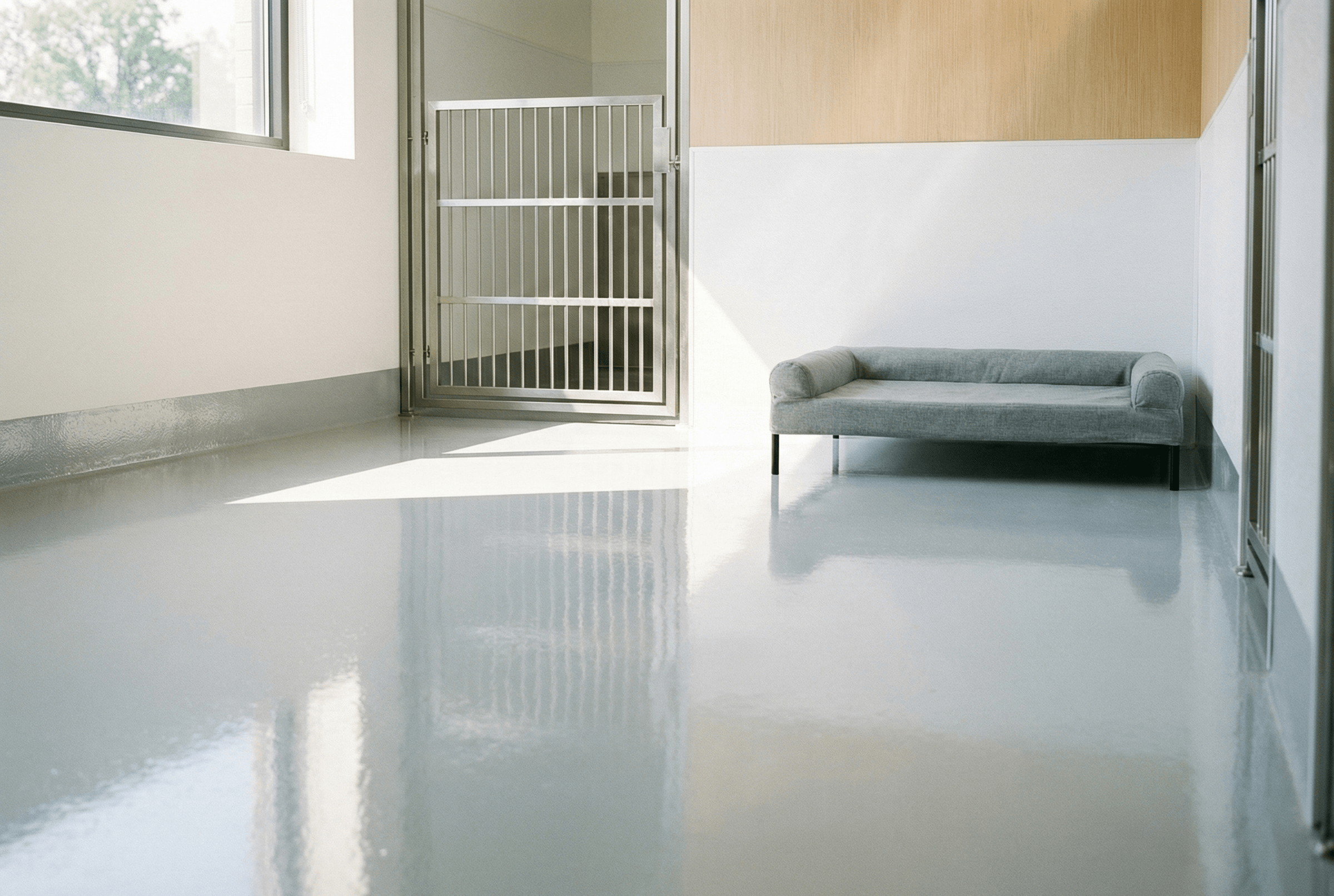
Designing a kennel or cattery is not just about keeping the animals in; it's about keeping infection out.
Concrete is the standard choice for animal enclosures, but raw concrete is a sponge. It absorbs urine, harbours Parvovirus and bacteria, and retains smells that no amount of scrubbing can remove. To pass licensing inspections and keep your animals healthy, you need a sealed, impervious surface.
But you cannot just use any old garage floor paint. Animals are sensitive. They sleep on the floor, they lick the floor, and their paws are sensitive to chemicals.
Here is the guide to choosing a flooring system that is tough on disease but safe for pets.
1. The "Pet Safe" Rule: Non-Toxic and Low Odour
The most critical factor is the fumes. Standard industrial paints are full of Solvents (VOCs). These release heavy fumes that linger for days.
-
The Risk: Dogs and cats have a sense of smell thousands of times stronger than humans. Putting an animal in a freshly painted room with solvent fumes can cause respiratory distress, eye irritation, and stress.
-
The Solution: You must use an Animal Safe Epoxy. These are virtually odourless and contain no harmful solvents. Once cured, they are essentially inert plastic - non-toxic even if licked.
2. Chemical Resistance: Dealing with Urine and Bleach
Kennel floors face a unique chemical attack.
-
Urine: Animal urine is highly acidic (and ammonia-rich as it degrades). It will etch and yellow standard acrylic paints.
-
Disinfectants: You likely use strong cleaners like Bleach, Virkon, or Parvo-Virucide daily.
A single-pack floor paint will dissolve under this regime. You need a 2-Pack Epoxy Coating. Epoxy is chemically resistant. It creates a seamless barrier that stops urine from soaking into the concrete, meaning the smell washes away with the water rather than staying in the building.
3. The Texture Balance: Grip vs. Paws
This is the hardest balance to strike.
-
Too Smooth: The floor is easy to hose down, but dogs (especially older ones or those with hip dysplasia) will slip, slide, and injure themselves.
-
Too Rough: The floor offers great grip, but it rips up the pads of their paws and traps dirt, making it impossible to disinfect.
The Solution: A "Soft" Anti-Slip. Do not use jagged aluminium oxide grit. Instead, use a Fine Polymer Bead scattered into the topcoat. This creates a "sandpaper" texture that provides grip for claws without being sharp enough to cut sensitive pads.
4. The Cleaning Protocol: Seamless Coving
Hose-downs are part of daily life in a kennel. If you have a 90-degree angle where the wall meets the floor, water and hair will get trapped there. It becomes a breeding ground for bacteria.
-
Recommendation: Install Epoxy Coving (a curved skirting). This allows you to hose the room out completely, with the water flowing down the wall and across the floor to the drain without hitting any snag points.
5. Aesthetics: Reducing Stress
Believe it or not, colour matters. Bright white floors might look clean to you, but they can be dazzling and stressful for animals under bright lights. Dark grey can make a kennel feel small and gloomy.
-
Pro Tip: Opt for pastel greens or soft blues. These are calming colours that reflect light without glare, helping to create a relaxed environment for boarding pets.
Conclusion
Your floor is the most used piece of equipment in your kennel. Don't cut corners with cheap masonry paint that will flake off and cause a risk for your animals.
Invest in a High-Build, Solvent-Free Epoxy System. It keeps the smell out, the bacteria dead, and the animals safe.
Setting up a new facility? Browse our Pet Safe Flooring Range.
Share:
Epoxy vs. Polyurethane vs. Acrylic: Selecting the Right Paint