

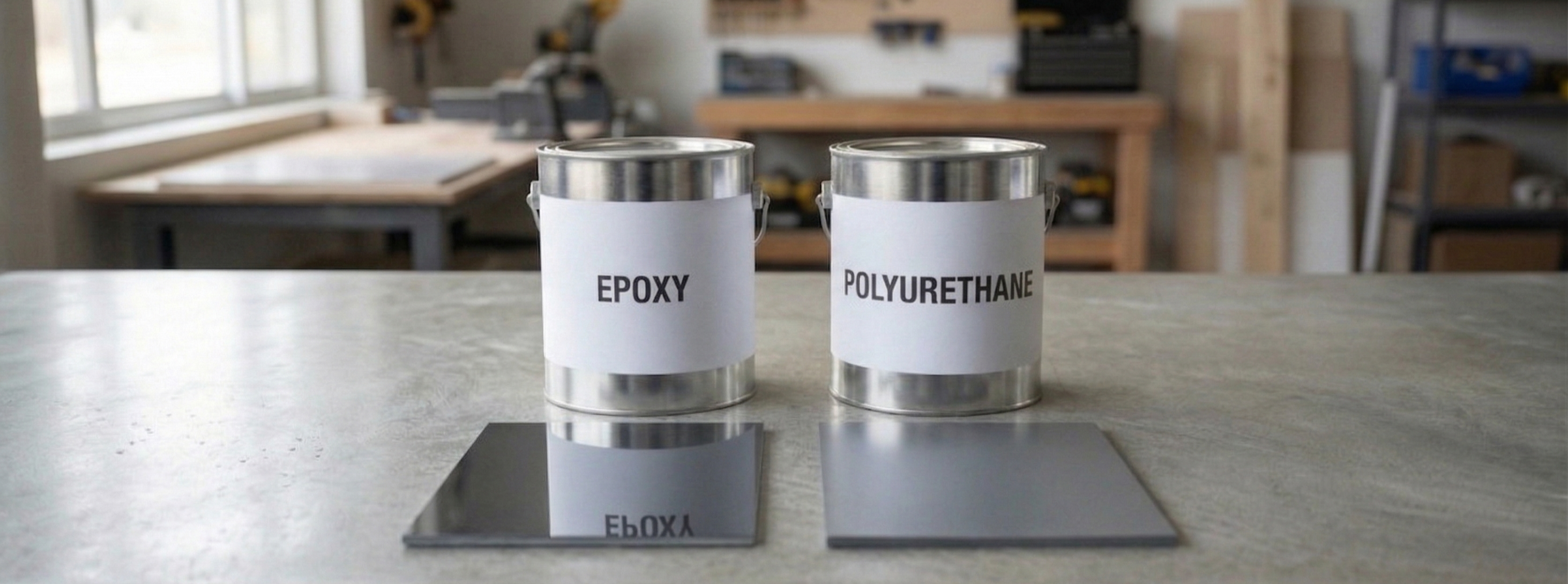
Painting an interior concrete floor - like a garage, workshop, or warehouse - is all about anticipating physical abuse. Without the threat of weather to worry about, your focus shifts entirely to what will be happening on top of the slab: hot tyres, dropped tools, heavy foot traffic, and chemical spills.
For interior concrete, you need a coating that bonds relentlessly to the floor. While there are many options on the market, the decision almost always comes down to two heavyweight contenders: Single Pack Polyurethane and Two Pack Epoxy.
Both of these resins are excellent choices, but they are built for entirely different environments. The right product for you depends on your budget, your timeline, and whether the floor will see light domestic use or heavy industrial punishment.
Here is the breakdown of the pros and cons to help you choose the right system.
1. Two Pack Epoxy: The Heavyweight Champion
If you want the absolute toughest floor money can buy, Two Pack Epoxy is the commercial standard. It comes in two separate tins (a base resin and a hardener) that must be mixed together to trigger a rapid chemical curing process.
The Pros of Epoxy:
-
The Strongest Option: Epoxy cures to a remarkably hard, rigid finish. It boasts the highest abrasion and impact resistance of any standard floor coating. If you are regularly dropping heavy steel tools, dragging pallets, or running heavy forklift traffic over the slab, epoxy will take the punishment.
-
Chemically Resistant: Epoxy creates an incredibly dense, impermeable barrier. It is highly resistant to engine oil, brake fluid, petrol, and harsh cleaning solvents, making it the required choice for commercial mechanics and manufacturing factories.
The Cons of Epoxy:
-
Labour Intensive to Apply: Applying epoxy is not a casual Sunday afternoon job. Because it relies on a two-part chemical reaction, you are working against the clock (known as "pot life"). Once mixed, you might only have 30 to 45 minutes to get the paint out of the bucket and onto the floor before it sets solid. It is also unforgiving; if your concrete isn't perfectly clean, degreased, and primed, epoxy will fail to bond.
-
Expensive: Premium two-pack epoxies are significantly more expensive than single-pack paints due to the intensive manufacturing process and high-grade raw materials required.
2. Single Pack Polyurethane: The Smart All-Rounder
If epoxy is the commercial heavyweight, Single Pack Polyurethane is the ultimate DIY hero. "Single pack" means the paint is pre-mixed and ready to go straight out of the tin.
The Pros of Polyurethane:
-
Ease of Application: There is no mixing, no measuring, and no ticking clock. You simply open the tin, stir it, and roll it onto the floor. If you need to take a break, you just put the lid back on. It is incredibly user-friendly for first-time painters.
-
Excellent Protection at a Lower Cost: Polyurethane provides a highly durable, oil-resistant finish that is more than capable of handling foot traffic, domestic vehicles, and general workshop spills. Best of all, it achieves this at a fraction of the cost of a full two-pack epoxy system.
The Cons of Polyurethane:
-
Not as Tough as Epoxy: While single-pack polyurethane is tough, it does not cure as hard or thick as a two-pack epoxy. Under extreme commercial conditions (like daily forklift routes or heavy industrial manufacturing), polyurethane will scratch and wear down faster than epoxy.
The Verdict: Which Should You Choose?
The choice comes down to matching the paint to the specific traffic and abuse your room will endure.
Choose Single Pack Polyurethane for Light to Medium Traffic:
-
Domestic garages housing personal cars.
-
Home gyms and utility rooms.
-
Light-use workshops and foot traffic warehouses.
-
Projects where you are on a strict budget or want a stress-free, easy application.
Choose Two Pack Epoxy for Heavy Traffic & Chemical Spills:
-
Commercial MOT garages and mechanic workshops.
-
Industrial warehouses and forklift routes.
-
Factory floors prone to chemical or solvent spills.
-
Projects where you are willing to invest the money and the labour for a floor that will last a decade under heavy abuse.
Polyurethane vs. Epoxy: At a Glance
|
Feature |
Single Pack Polyurethane |
Two Pack Epoxy |
|
Durability & Strength |
High (Great for domestic/light use) |
Maximum (Built for heavy industrial abuse) |
|
Chemical Resistance |
Good (Handles general oil & spills) |
Excellent (Resists harsh solvents & fuels) |
|
Ease of Application |
Very Easy (No mixing, no time limits) |
Difficult (Requires mixing, strict "pot life") |
|
Cost |
Budget-Friendly |
Premium Investment |
|
Best Suited For |
Home garages, gyms, light workshops |
Commercial mechanics, forklift routes, factories |
Conclusion
Interior concrete demands protection from friction, impacts, and spills. Whether you choose the cost-effective convenience of polyurethane or the unmatched industrial strength of epoxy, applying a dedicated floor resin will instantly transform a dusty, grey slab into a clean, professional workspace.
-
Polyurethane: Easy, affordable, and perfectly protective for home and light use.
-
Epoxy: Unbeatable strength and chemical resistance for heavy-duty environments.
Ready to protect your concrete?
→ Shop our range of Interior Concrete Floor Paints.
Share:
Can You Paint Over Existing Decking Paint?
Best Paint for Commercial Kitchens? Why You Need Two-Pack Epoxy