

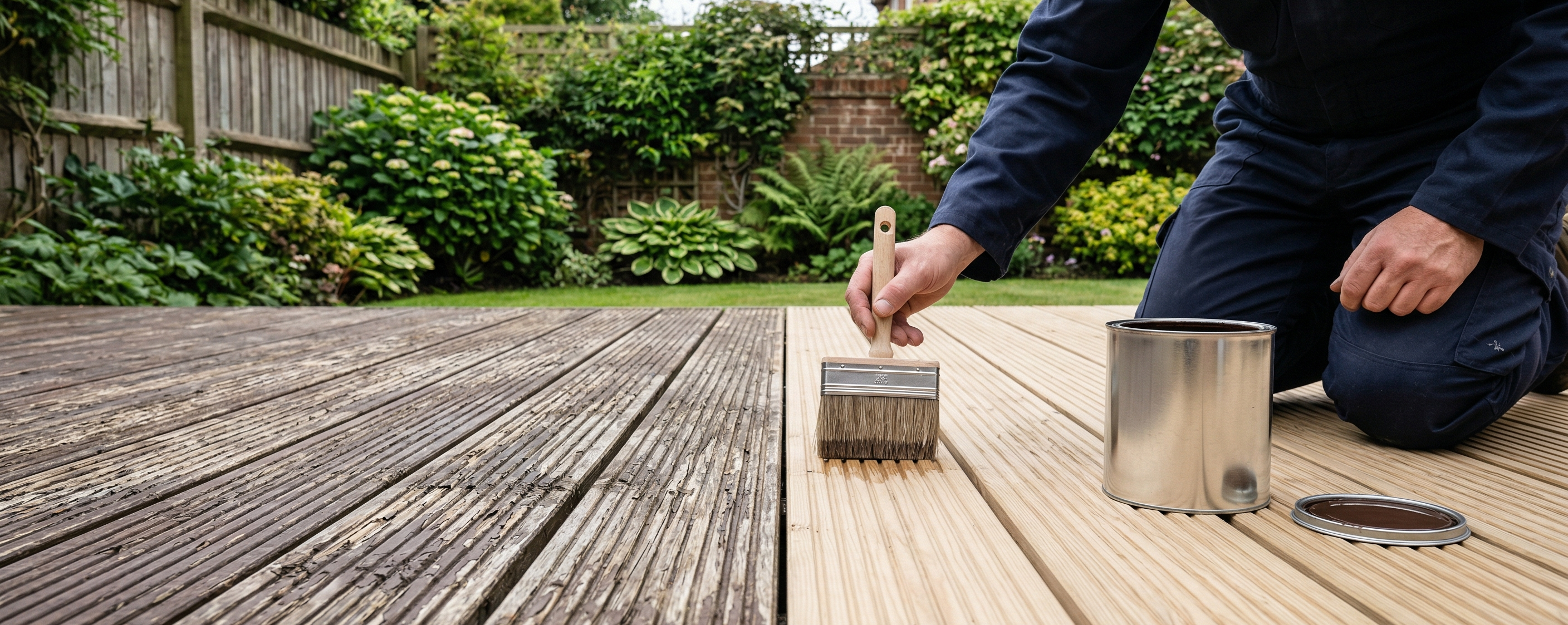
Short Answer
Yes, but only if the existing coating is structurally sound. If your current paint is peeling, flaking, or worn through to bare wood, applying a fresh coat directly on top is a guaranteed recipe for failure. Any instability in the base layer will be inherited by the new coat; as the old paint continues to lift, it will take the expensive new layer with it. To ensure a professional bond, you must sand back failed areas to a solid feathered edge or bare wood before proceeding.
-
The Inheritance Rule: A new coating is only as strong as what lies beneath it. If the old paint has lost its grip, the new paint has no foundation.
-
Moisture Traps: Peeling paint creates pockets where water sits against the timber, leading to rot and further delamination.
-
Preparation vs. Speed: Taking the time to sand now prevents the need to strip the entire deck in six months' time.
→ Shop Everest - DEKCOAT - Ultimate Decking Paint
The Good vs. Bad Condition Test
Before picking up a brush, you need to perform a diagnostic check on your deck. Not every deck needs to be sanded back to bare wood, but every deck needs to be stable.
Scenario A: The Good Condition (Clean & Coat)
If your existing paint is faded but remains firmly bonded to the wood with no signs of cracking or lifting, you are in the maintenance category.
-
The Process: A thorough cleaning with a stiff brush and a specialised deck wash is usually sufficient. This removes surface chalking and environmental oils, allowing the new coat to chemically bond to the old one.
Scenario B: The Bad Condition (Strip & Sand)
If you can see islands of paint, bare wood patches, or edges that you can lift with a putty knife, your deck is in failure mode.
-
The Process: You must sand these areas back. Applying new paint over these loose edges will simply seal in the failure. As the wood naturally expands and contracts with moisture, those loose flakes will move, causing the new, stiff paint film to crack and peel almost immediately.
Why Paint Peels: The Role of Moisture and UV
Wooden decking is a living substrate. Unlike concrete, timber is hygroscopic, meaning it constantly absorbs and releases moisture from the atmosphere.
When paint begins to peel, it is often because the wood has "moved" more than the paint film could handle. This is usually caused by:
- Lignin Degradation: UV rays break down the glue (lignin) that holds wood fibres together. If the paint was applied to UV-damaged wood, it is only sticking to a dead layer of fibres that will eventually slough off.
- Moisture Cycling: If water gets under a small crack in the paint, the wood swells. When it dries, it shrinks. This mechanical tugging at the bond line eventually snaps the adhesion.
How to Prepare a Worn Deck Properly
If your deck is showing signs of wear, follow these "Technical Mentor" steps to ensure your next coat lasts for years, not months.
1. The "Scrape and Feather" Method
You don't always have to sand the entire deck to bare wood. Use a heavy-duty paint scraper to remove everything that is loose. Once you reach paint that is firmly stuck, use 80-grit sandpaper to feather the edge. This means sanding the transition between the bare wood and the old paint until it is smooth to the touch. This prevents a "step" in the finish where water could collect.
2. Deep Cleaning
Once the loose material is gone, the deck must be cleaned. Old wood often develops a silver/grey patina; this is dead wood fibre. Paint will not stick to this. Use a stiff deck brush and a cleaning solution to scrub the bare areas until the bright wood is revealed.
3. The Dryness Window
Wood must be significantly drier than concrete before painting. We recommend a maximum moisture content of 15% to 18%. If you paint over damp wood, the moisture will try to escape as the sun hits the deck, creating steam pressure that will blow the new paint off the surface in blisters.
Honest Trade-offs: Aesthetics vs. Longevity
The Visual Cost of Spot-Sanding: If you only sand back the peeling patches and paint over the rest, you may see shadows of the old patches through the new finish, especially in direct sunlight. If you want a "magazine-perfect" look, a full sand to bare wood is the only way to achieve a uniform texture.
Solid Colour vs. Translucent: If your deck is in poor condition with many repairs, a Solid Colour Deck Stain or heavy-duty floor paint is your best friend. These products have higher pigment levels that hide the "scars" of previous peeling and different wood grains better than semi-transparent oils.
The Sanding Myth: Many people believe a pressure washer can replace a sander. While a pressure washer is great for cleaning, it often "fuzzes" the wood fibres and can't remove tightly bonded failed paint. There is no chemical or water-based substitute for the mechanical "bite" created by a sander.
Share:
Best Paint for Outdoor Concrete? Why Water-Based Acrylic is the Only Choice
Best Paint for Interior Concrete? Polyurethane vs. Epoxy