System Overview
For render, brick and blockwork façades, protective coatings must provide weather resistance, controlled breathability and long-term colour stability under external exposure. Exterior wall paints for render and brick are specified to protect mineral substrates from moisture ingress, surface erosion and UV degradation while maintaining an appropriate vapour profile.
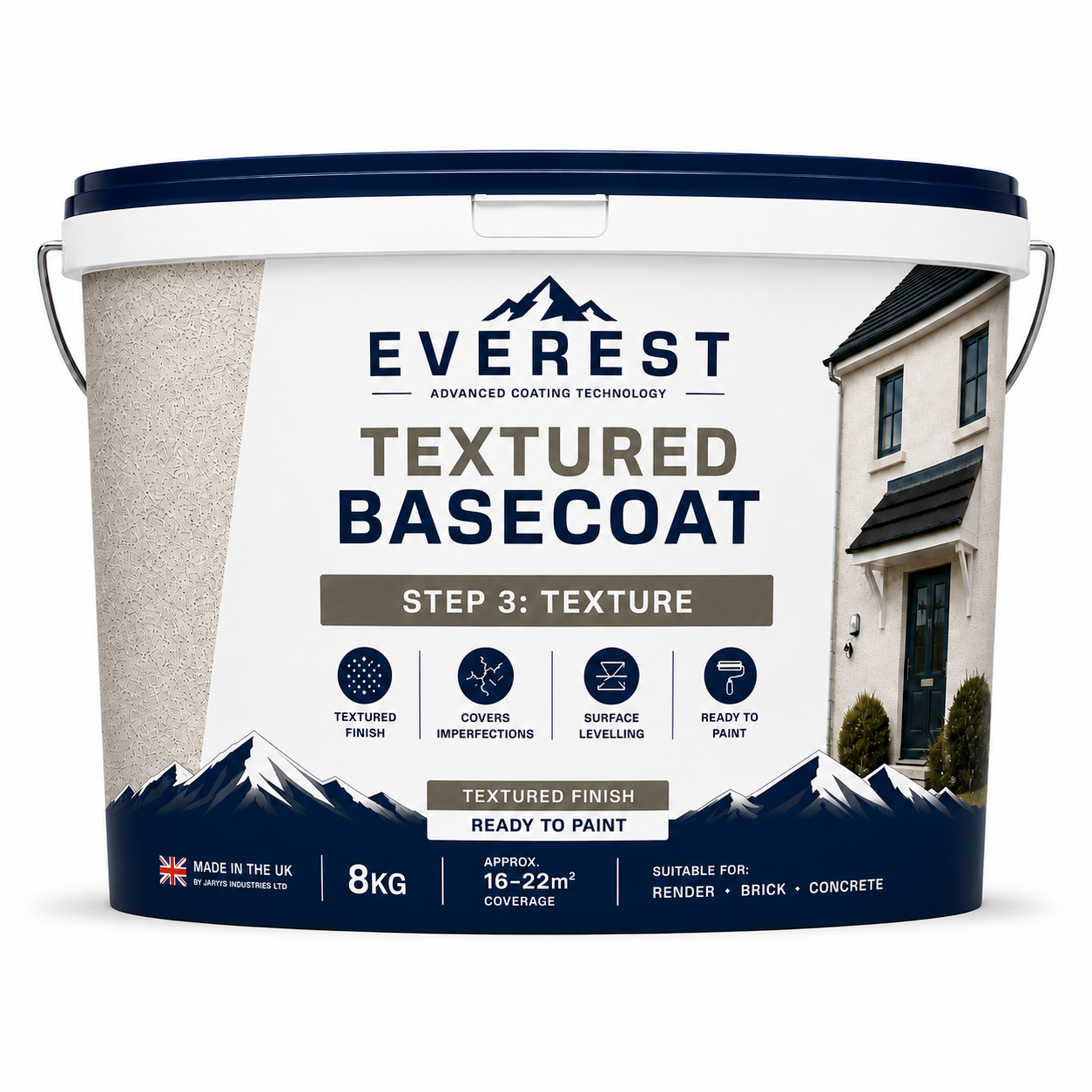
This collection centres on acrylic paint and sealer systems formulated for domestic and commercial buildings. These coatings are designed to bond effectively to prepared masonry and previously painted surfaces, offering smooth and textured finish options depending on aesthetic and substrate requirements.
Acrylic technology provides flexible film formation and UV stable colour retention, making it suitable for a wide range of façades including residential properties, retail units and light industrial premises.
Suitable Substrates & Surface Preparation
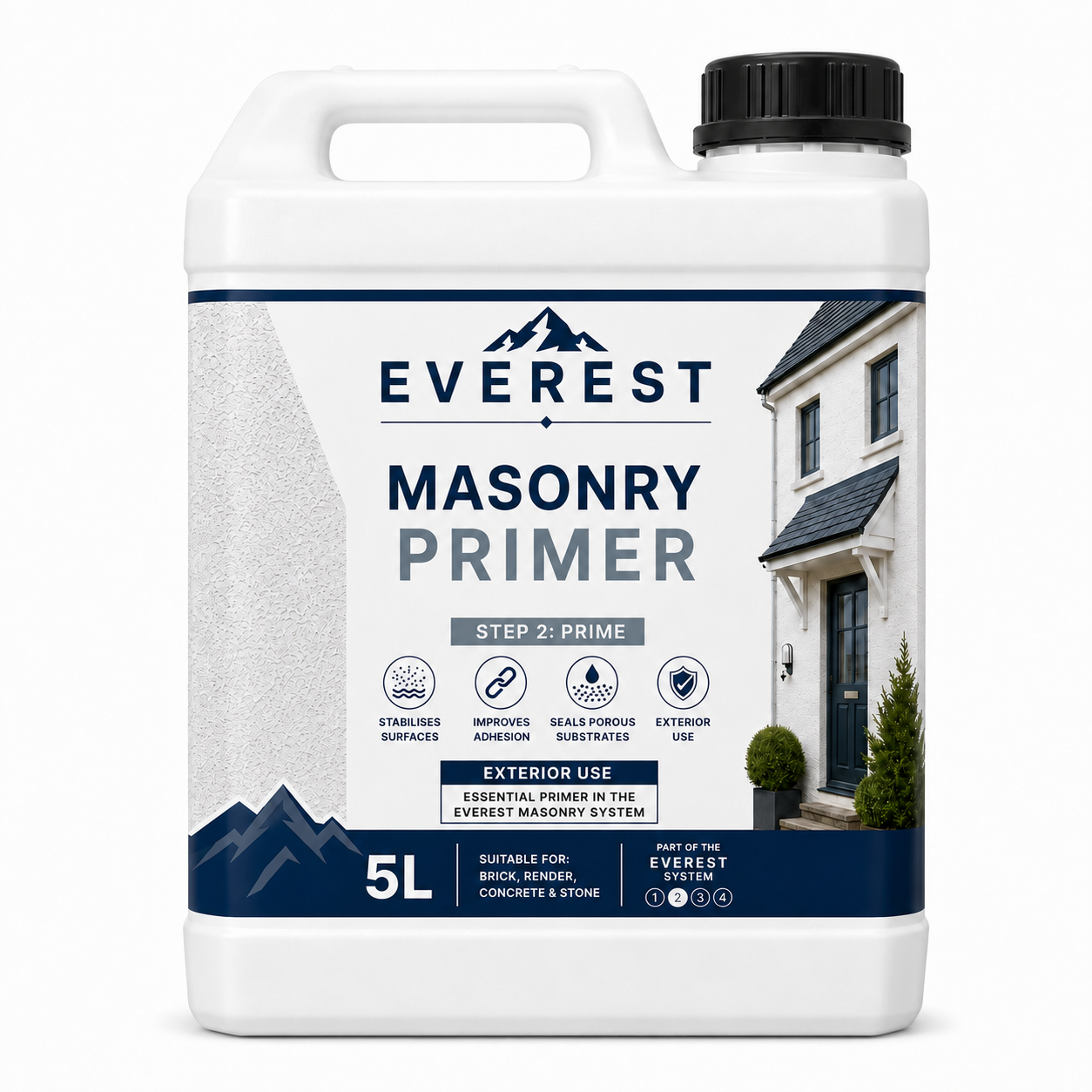
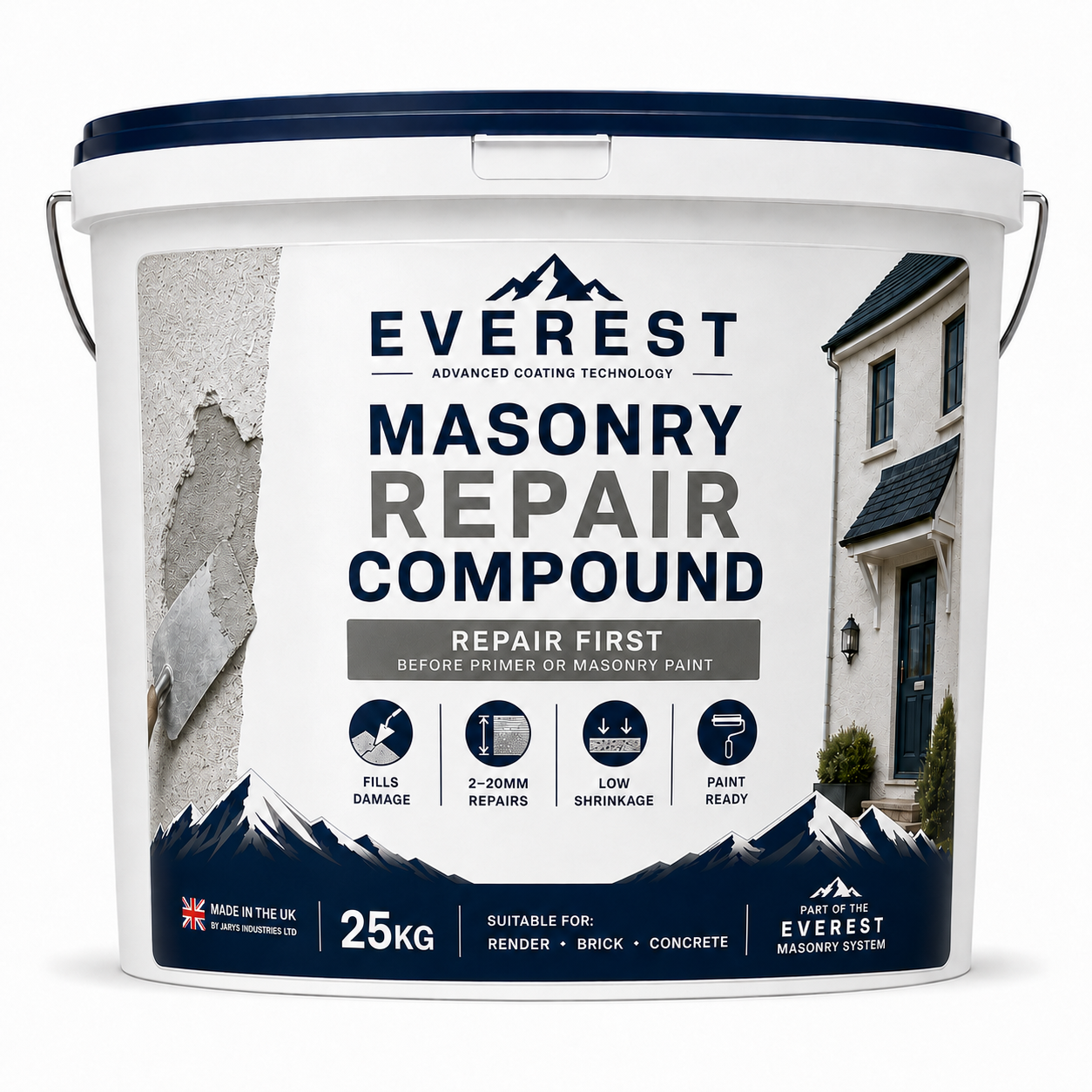
Render must be sound, fully cured and free from friable material before coating. Cracked or hollow areas should be repaired prior to application. Chalked or porous surfaces may require stabilisation using compatible masonry primers or sealers to ensure uniform absorption and adhesion.
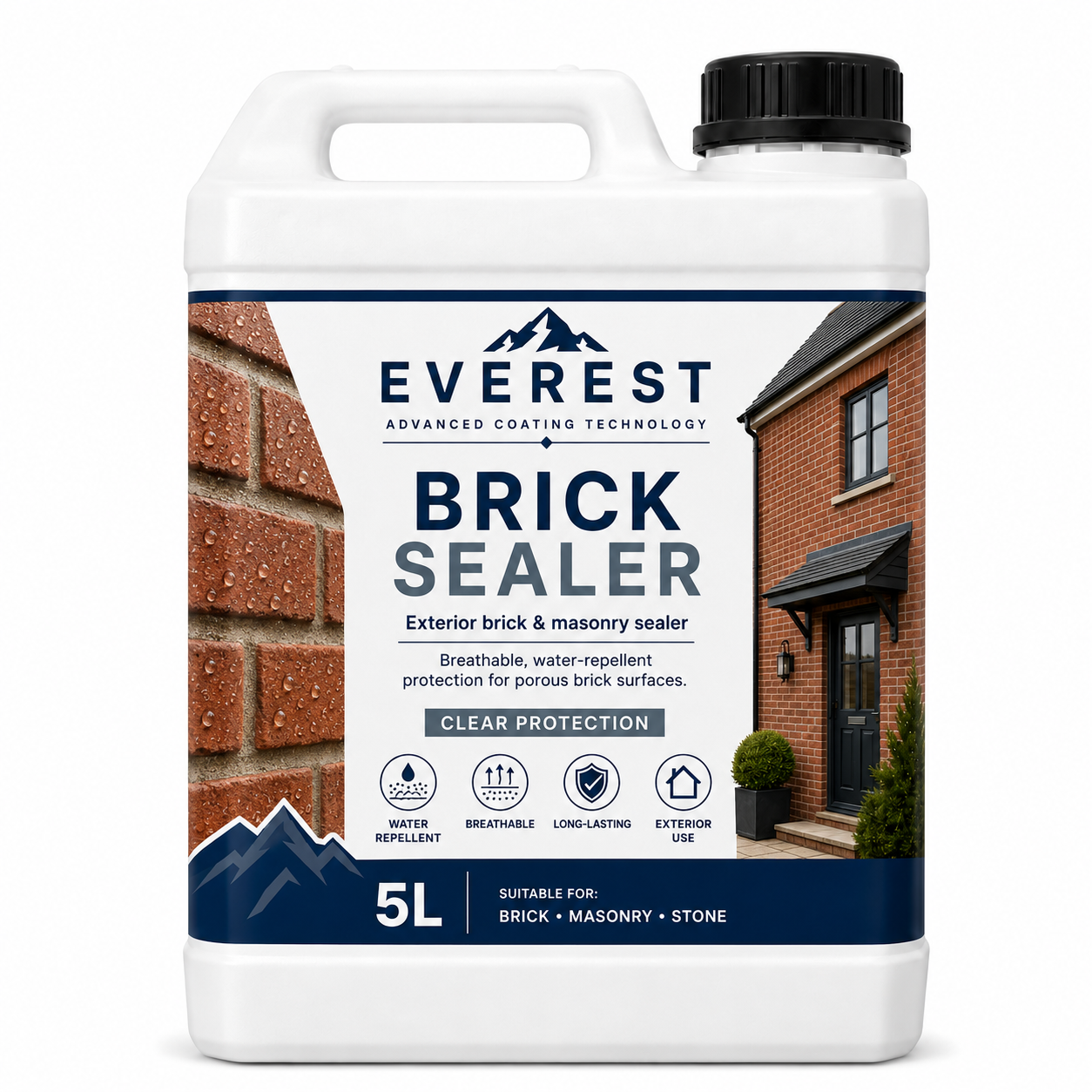
Brick and blockwork substrates should be clean and free from efflorescence, algae and atmospheric contamination. Any salts or biological growth must be removed before coating. Highly absorbent masonry may require priming to control suction and achieve consistent finish.
Previously painted masonry should be assessed for adhesion and compatibility. Sound coatings can typically be overcoated following cleaning and abrasion. Flaking or failing paint must be removed to provide a stable base.
Cladding substrates within masonry façades should be checked for material type and existing coating condition. Preparation requirements vary depending on whether the cladding is cementitious or previously coated metal.
Moisture levels are critical. Coating should not proceed on saturated walls or where rising damp issues remain unresolved.
Performance Characteristics & Limitations
Acrylic exterior wall paints provide weather resistant protection against wind-driven rain and general atmospheric exposure. Their breathable formulation allows moisture vapour to escape from mineral substrates, reducing the risk of blistering where minor residual moisture is present.
UV stable pigments and resin systems support long-term colour retention, particularly on sun-exposed elevations. Smooth and textured finish options enable selection based on surface uniformity and aesthetic intent.
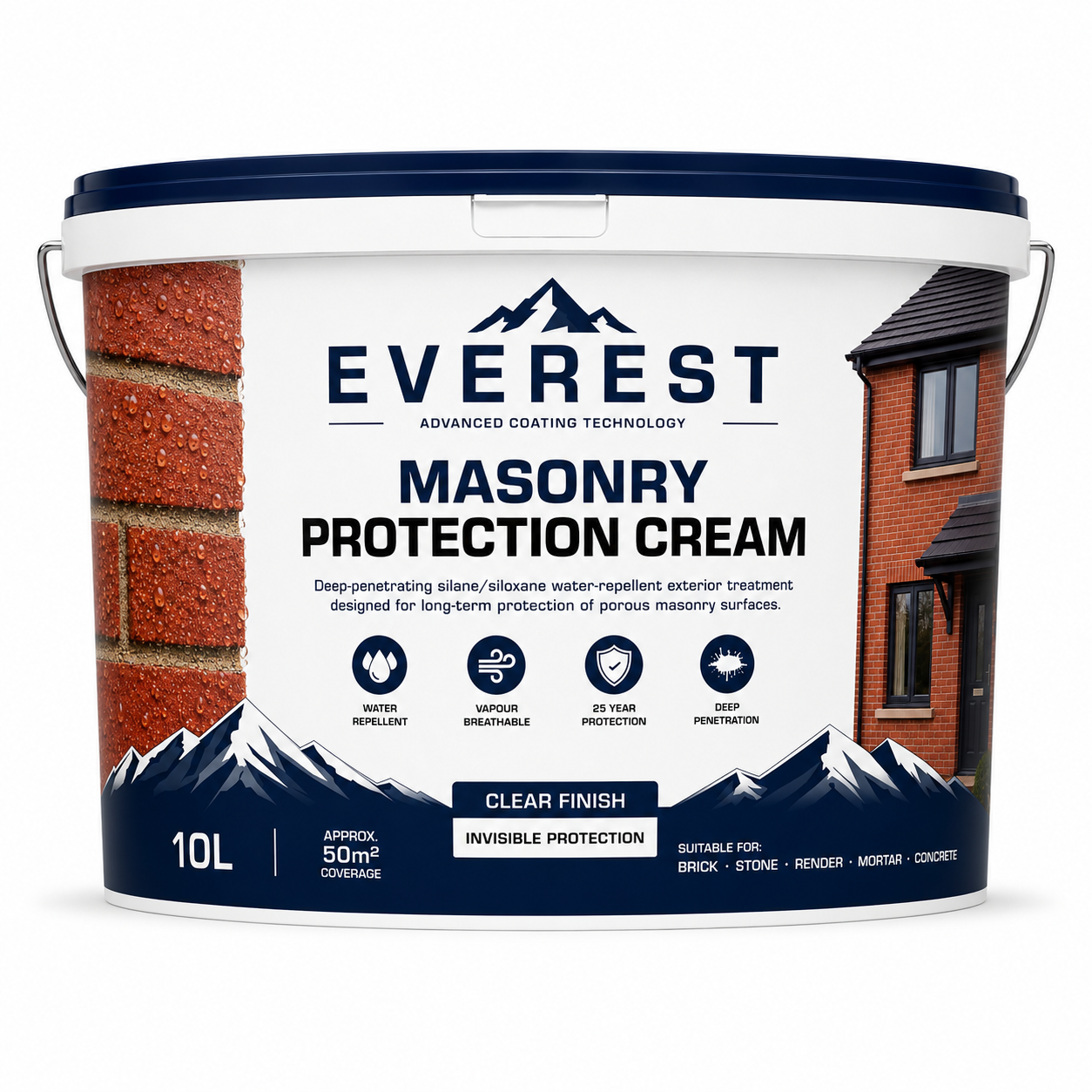
Sealer systems within the collection can improve water repellency and substrate consolidation, helping to reduce moisture ingress while maintaining vapour permeability.
These systems are not designed to bridge structural movement or active cracking without appropriate preparatory repair. Persistent substrate movement will transmit through the coating film. They are also not suitable for constant water immersion or severe structural damp conditions.
Performance is directly dependent on substrate condition, preparation quality and environmental conditions during application.
Internal vs External Considerations
This collection is intended for external façades. Exposure to UV radiation, rainfall and temperature cycling are primary design factors. Acrylic systems are selected for their balance of flexibility and colour stability under sunlight.
Application should take place in suitable weather conditions, avoiding rain during curing and excessively low temperatures that may inhibit film formation.
In sheltered or partially covered areas, breathable characteristics remain important to manage moisture within masonry walls, particularly on older buildings.
Selection Guidance & When to Specify Alternatives
Exterior wall paints within this collection are suited to refurbishment and new coating of render, brick and blockwork in domestic and commercial environments.
For standard residential and light commercial exposure, acrylic masonry systems provide effective and maintainable façade protection. Where substrates are highly porous or degraded, incorporation of stabilising primers and sealers is recommended.
In exposed coastal locations, high pollution urban areas or façades subject to heavy mechanical wear, consideration should be given to higher durability or specialist façade protection systems offering enhanced resistance.
System selection should reflect substrate type, moisture profile, exposure severity and required service life. Correct preparation and realistic assessment of wall condition are fundamental to long-term performance.